> For the complete documentation index, see [llms.txt](https://handbook.opencoreventures.com/llms.txt). Markdown versions of documentation pages are available by appending `.md` to page URLs; this page is available as [Markdown](https://handbook.opencoreventures.com/ocv-employees/people-operations/recruiting.md).
# Recruiting
Page Summary: OCV Recruiting Process Overview, Posting a Job, Interview Process, Culture Fit Considerations, and Resume Review Tips.
## Recruiting process
At OCV, we strive to provide a great candidate experience in our recruiting process. Here are general guidelines on how we recruit at OCV and our portfolio companies.
## Job posting
The Hiring Manager and recruiting team will:
1. Create a [job description](https://handbook.opencoreventures.com/company-ops/people-ops/recruiting/job-description-guide)
2. Establish the interview team and plan (stages and interviewer order)
3. Customize role-specific questions
4. Post the job to various job boards (for example, LinkedIn, Indeed, and Glassdoor) via the Greenhouse application tracking system
## General interview process
Candidates generally have three rounds of interviews (with case-by-case exceptions) due to the nature of the role.
1. Initial Conversation with Recruiting: In this initial conversation, we want to know more about the candidate as a person and their interest in this role. The candidate should be prepared to discuss logistics such as location, availability to start a new role, and their preferred range of compensation.
2. Interview with the Hiring Manager: In this second conversation, we evaluate the candidate’s skills, experience, and work history. The interviewer will also discuss more details concerning the project and the team.\
NOTE: For Engineering Roles: The interviewing team may ask the candidate to do a project as part of the hiring process.
3. Final Round of Interviews: In the final round, the candidate meets with additional team members as appropriate.
4. Team Debrief: The interview team has an internal discussion concerning the candidate and determines whether we move forward with the hiring process.
5. Reference Checks: We request that candidates provide three references before making an offer. NOTE: Four references are required for manager roles.\
Candidates should provide managerial references, if possible. This helps us learn more about their areas for improvement and how to harness their strengths. In addition to assessing fit and gaining context on the individual, it also helps us learn how to best support their success in this role.\
We would like to connect with a current or former colleague in each of the following areas:
6. The candidate’s direct (or former) supervisor - Someone who is familiar with their work
7. A peer in the same role as the candidate - Someone who did similar work
8. A cross-functional partner or customer - Someone who was a consumer of the candidate’s work
9. if the candidate is applying for a management position, include someone the candidate supervised
10. NOTE: We may ask for references *prior* to the Final Round.“Backdoor Reference Checks” - Reaching out to network connections who may know the candidate is great way to get valuable feedback during the recruiting process. NOTE: Prior to pursuing a “Backdoor Reference Check,” ask the candidate if there is anyone they prefer to *exclude*.
11. Verbal Offer: Once we complete the reference checks (with satisfactory results), we move forward with a verbal offer.
12. Formal Offer:
13. Follow the process outlined [here](https://docs.google.com/document/d/1NSd9sS8wcW9XZ2s8sS_la7PHdohmQvMSVSWs1a2l6cw/edit)
14. Onboarding: Onboarding will proceed after passing a background check
## Looking for the right fit
Venture capital and early-stage startup life isn’t suitable for everyone for a variety of reasons (sometimes, it’s a function of timing). In addition to prerequisite skill sets and experience, we’re looking for team members who help us accelerate growth and accomplish the impossible.Some of the questions we’d consider during the interview process:
1. As the Hiring Manager, would you want to be in the trenches with this candidate?
2. Would you want to spend a lot of time together and work through conflicts.
3. We’re in a rowing race, aimed to win, are they paddling in the same direction as the rest of the team?
4. Are they a team player or put their self-interest first?
5. Would you see yourself starting a company with this person in the future?
6. Are they entrepreneurial? Driven with big goals and self-motivated?
7. Would you see them doing something amazing in four to six years?
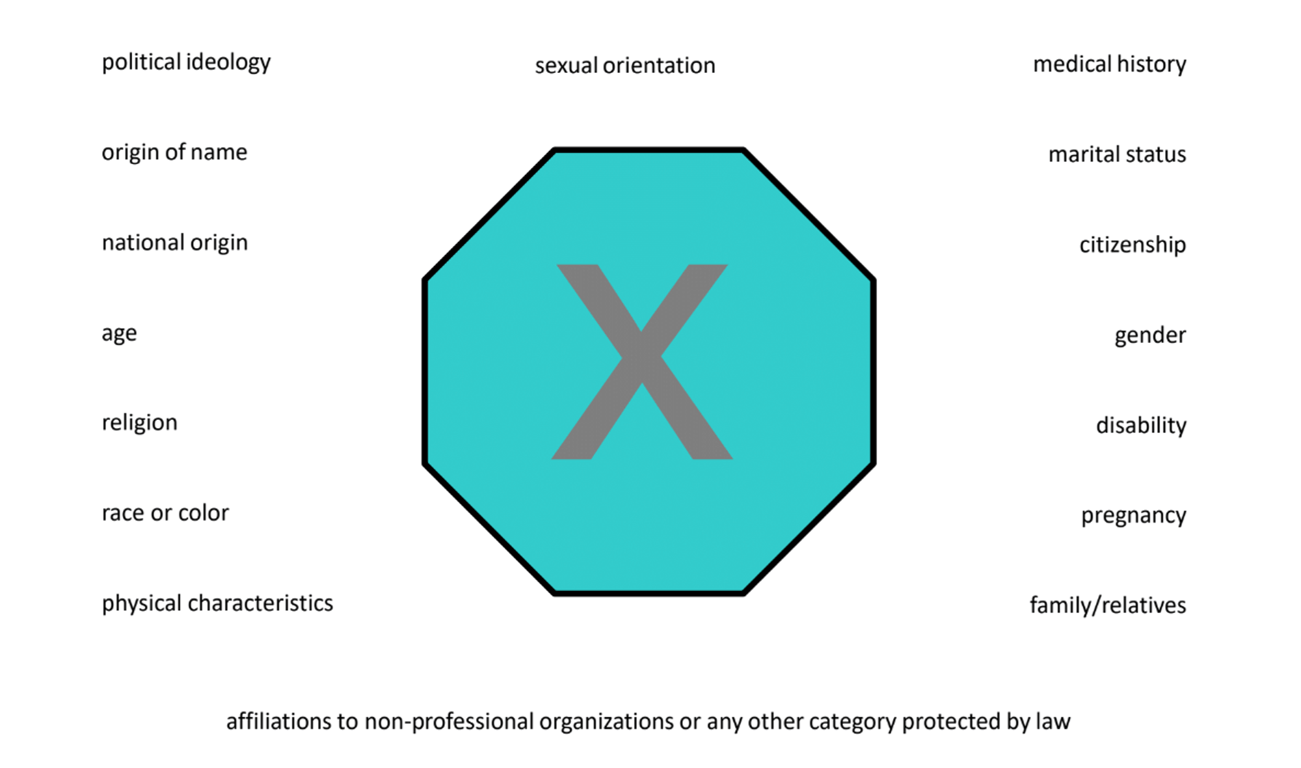
#### Inappropriate Questions
When hiring in the USA it is important to not discuss the following topics about personal characteristics that are protected by law:
## Resume Review Tips
Assessing candidate resumes effectively is crucial to identify the most qualified individuals for a position. Here's a recommended guide on how to assess candidate resumes:
1. **Review Job Description:** Begin by thoroughly understanding the job description and its requirements. This will help you identify the key skills, experiences, and qualifications you're looking for in a candidate.
2. **Create a Screening Checklist:** Develop a checklist of essential criteria, such as required skills, education level, years of experience, and specific qualifications. This will serve as your guide when reviewing resumes.
3. **Skim for Immediate Fit:** Give each resume a quick scan to see if the candidate meets the basic requirements. Look for keywords and relevant information that align with the job description.
4. **Assess Relevant Experience:** Pay attention to the candidate's work experience section. Look for roles that directly relate to the position you're hiring for. Focus on the candidate's accomplishments, responsibilities, and quantifiable results.
5. **Highlight Achievements:** Prioritize candidates who have demonstrated exceptional accomplishments in their previous roles. Look for those who have made a positive impact, achieved goals, and gone beyond basic job responsibilities.
6. **Highlight Potential Flags 🚩**: Multiple roles less than 2 years in duration is a major red flag. It can take organizations up to 1.5 years to remove non-performers. Keep in mind that people who job hop generally interview extremely well. Short-term positions should be accompanied with reasonable explanations (e.g. moved locations to be closer to family) and strong references from former managers.
7. **Check Education and Certifications:** Verify that candidates have the required educational background and any necessary certifications for the role.
8. **Evaluate Skills:** Assess both technical and soft skills mentioned in the resume. Check for specific skills mentioned in the job description and assess the depth of the candidate's expertise.
9. **Quantify Experience:** Prefer candidates who provide quantifiable results in their work experience section. Numbers and metrics give a clear picture of their achievements and contributions.
10. **Assess Career Progression ⭐️:** Evaluate whether the candidate's career progression is logical and demonstrates growth. Look for candidates who have taken on more responsibility over time. This is one of the most critical steps for experienced hires. Lateral / backward moves are generally a red flag **🚩**.
11. **Examine Gaps:** If there are gaps in a candidate's employment history, assess how they explain these gaps in their resume. Look for valid reasons such as further education, personal projects, or career transitions.
12. **Review Additional Sections:** Pay attention to sections like volunteer work, certifications, awards, and affiliations. These can provide additional insights into a candidate's character and interests.
13. **Cultural Fit:** Consider whether the candidate's resume reflects values and qualities that align with your company culture. This can be seen through their achievements, interests, and any relevant personal information.
14. **Avoid Bias:** Be mindful of unconscious bias during the review process. Evaluate candidates based on their qualifications and experience, rather than factors like gender, ethnicity, or age.
15. **Compare Multiple Resumes:** If you're reviewing multiple resumes, create a scoring system or a ranking mechanism to objectively compare candidates.
16. **Shortlist Candidates:** Based on your assessment, create a shortlist of candidates who best match the job requirements. These are the individuals you'll consider for the next stages of the hiring process.
17. **Additional Review:** If possible, have another team member or colleague review the resumes as well. Different perspectives can help identify strengths and weaknesses you might have missed.
Remember that the resume is just the first step in the assessment process. Once you've identified potential candidates, you can conduct interviews and other assessments to make a well-informed hiring decision.
---
# Agent Instructions
This documentation is published with GitBook. GitBook is the documentation platform designed so that both humans and AI agents can read, navigate, and reason over technical content effectively. Learn more at gitbook.com.
## Querying This Documentation
If you need additional information that is not directly available in this page, you can query the documentation by asking a question.
Perform an HTTP GET request on the following URL with the `ask` and `goal` query parameters:
```
GET https://handbook.opencoreventures.com/ocv-employees/people-operations/recruiting.md?ask=&goal=
```
`ask` is the immediate question: it should be specific, self-contained, and written in natural language.
`goal` is what the user is ultimately trying to achieve, the reason they need the answer. Sharing it helps GitBook give you a better, more relevant answer. A goal is most helpful when it describes the outcome the user wants rather than restating the question. For example, with `ask=how do I create an API token`, a goal like `automate deployments from our CI pipeline` lets GitBook tailor the answer to that use case.
The response will contain a direct answer to the question and relevant excerpts and sources from the documentation.
Use this mechanism when the answer is not explicitly present in the current page, you need clarification or additional context, or you want to retrieve related documentation sections.